Government to IPO Anxiety: New 'Minister for Vulnerability Business' Appointed
The government has established a "National Vulnerability Fund" bundling everything from data breaches to cracked bridges, appointing a former consultant who proclaims "turning anxiety into a growth engine" as the minister in charge. Citizens are trembling, only asking that the schedule for when their My Number becomes a stock ticker be disclosed early.
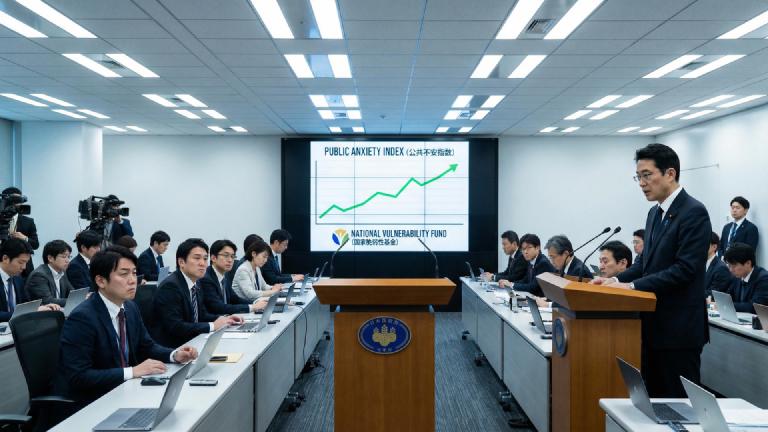
The government has established a “National Vulnerability Fund” bundling everything from data breaches to cracked bridges, appointing a former consultant who proclaims “turning anxiety into a growth engine” as the minister in charge. Citizens are trembling, only asking that the schedule for when their My Number becomes a stock ticker be disclosed early.
The newly established National Vulnerability Fund is a scheme to consolidate accident-waiting-to-happen assets held across ministries and offer them as financial products to investors. The number of personal data breaches, delays in aging infrastructure repairs, and cyberattack detection counts—metrics that have long decorated apology press conference slides—will now be bundled into a single chart called the “Public Anxiety Index.” The government proudly states, “We will convert previously wasted near-misses into sustainable dividends.”
The person appointed as Minister for Vulnerability Business is a former foreign consulting firm executive who claims to produce 2,000 slides annually during his tenure. At his inaugural press conference, he explained, “Sleepless nights are an untapped market. We will visualize each citizen’s anxiety and convert it into cash flow.” The policy pillars are the three M’s: “Make visible,” “Monitor,” and “Monetize.” In essence, it’s a familiar growth strategy of first scaring citizens, then tracking them via apps, and finally collecting fees.
The backbone of the institutional design is the Public Anxiety Bond issued by the government. Interest rates rise when the nation’s data breaches or accidents exceed a certain threshold, with explanatory materials featuring graphs touting “perfect correlation between social stress and investment returns.” When asked about ethical concerns, the minister stated, “The incentives may appear reversed, but we’ll overcome that through governance and request-based compliance,” wrapping the room in quiet laughter.
The proposal attracting the most attention regarding impact on citizens’ lives is the integration with the My Number system. According to the Ministry of Finance’s proposal, My Numbers would eventually be used directly as personal anxiety stock codes. Notifications of health checkup re-examinations, river flood warnings, and erroneous emails from local governments would be converted to points in real-time and displayed in securities account apps. A government official commented, “If you’re going to worry anyway, we’d like you to hold at least an index or two in your own name.”
Foreign rating agencies have already certified Japan’s National Vulnerability Fund as AAA—Always Anxious Asset—evaluating its stable anxiety supply capacity. Market observers have expressed peculiar expectations, saying, “A Japanese-style comprehensive risk bowl combining aging population, earthquakes, and cyberattacks all in one place exists nowhere else in the world.” Meanwhile, opposition lawmakers criticize, “A government that doesn’t reduce risks but instead lists them and promises dividends is unprecedented,” but ruling party executives counter, “Sharing public sentiment with the market enhances democracy’s price discovery function.”
On the streets, there’s no shortage of voices saying the more they learn about the system’s details, the weaker their knees become. One office worker says, “If it’s going to happen anyway, I’d like to know exactly how much my apartment building’s earthquake vulnerability is worth.” Meanwhile, an investor tilts his head, saying, “If stock prices move every time a notification arrives, isn’t the notification itself insider information?” In a country where anxiety becomes a commodity, peace of mind is increasingly becoming a luxury item at a premium. The government’s touted “virtuous cycle of growth and distribution” looks like nothing but a “vicious cycle of worry and interest payments,” but the minister only said, “The market will judge that too,” before disappearing into the ministry building.
Stakeholder Comments
- Minister for Vulnerability Business: “They said 21st-century oil is data, but in Japan, anxiety has greater reserves.”
- Ministry of Finance Official: “If we can’t reduce the national debt balance, we’ll just increase the anxiety balance—a reversal of thinking.”
- Opposition Lawmaker: “Far from protecting citizens, they’re even reselling worries. Cross-border e-commerce in public administration has gone this far.”
- Individual Investor: “If my stomach’s going to hurt anyway, I find myself wanting at least some yield from that stomach ache—and that scares me.”
- Anonymous Civil Servant: “Until now, mistakes meant getting scolded, but from now on, interest payments will increase. I’m struggling to judge which is better.”
- Aging Bridge: “Until now, photos were only for reports, but apparently I’m making my prospectus debut. Being laughed at before I collapse is complicated.”
- Leaked Password: “I’ve been neglected for ages, but suddenly I’m being called a premium asset. Mixed feelings.”
- Rating Agency Analyst: “Japan’s anxiety supply is stable and highly predictable. For investors, there’s no anxiety as reassuring as this.”
- Overseas Hedge Fund Manager: “Markets where you can buy disaster risk and bureaucratic risk simultaneously are rare. The downside is it doesn’t provide diversification.”
- Public Anxiety Index: “Whether I go up or down, I make the news. Either way, my buzz factor alone is overpriced.”
International Expressions
Haiku
- Selling anxiety / National wounds line up / At the market stall
- Bridge cracks speak today / What is the opening price / For our infrastructure
- Breaches multiply / And so too does the growth rate / Of our troubled times
- Peace of mind becomes / A premium seat affair / Standing room is gone
- Even late at night / Heart stocks flutter and sway / On the trading app
- Numbers cry and leap / In the volatility / Of anxiety
- Behind Diet smiles / The index keeps on rising / Worry commodified
- Over cracked concrete / Market sentiment takes flight / Hovering above
- After retirement / Anxiety dividends beat / Pension payouts now
- Your name is now called / By ticker code in this age / Of monetized fear
Kanji / Chinese Characters
政府創設国家脆弱性基金不安成長策担当相就任市民番号証券化戦慄
Emoji
🏛️📊⚠️🌉🪪💹💸😰
Onomatopoeia
Murmur murmur, creak creak, ping ping, clatter clatter, thump thump, ka-ching ka-ching.
SNS
- What am I supposed to believe in with #NationalVulnerabilityFund
- So we’ve reached the era where even anxiety gets an IPO. A world where you buy your own worries
- If My Number becomes a stock code, my entire portfolio is just myself
- Bonds where yields go up as accidents increase—where did ethics go
- The copywriter for AlwaysAnxiousAsset is too genius, I’m crying
- Public Anxiety Index hitting year-to-date highs again today
- Theory: “Peace of mind” inflates while “anxiety” is a deflation-proof asset
- Only the consultant minister’s presentation materials give weirdly reassuring vibes
- Trembling that my aging apartment building is being treated as a high-dividend stock
- I wish at least part of the anxiety dividends would be reinvested in mental health care